

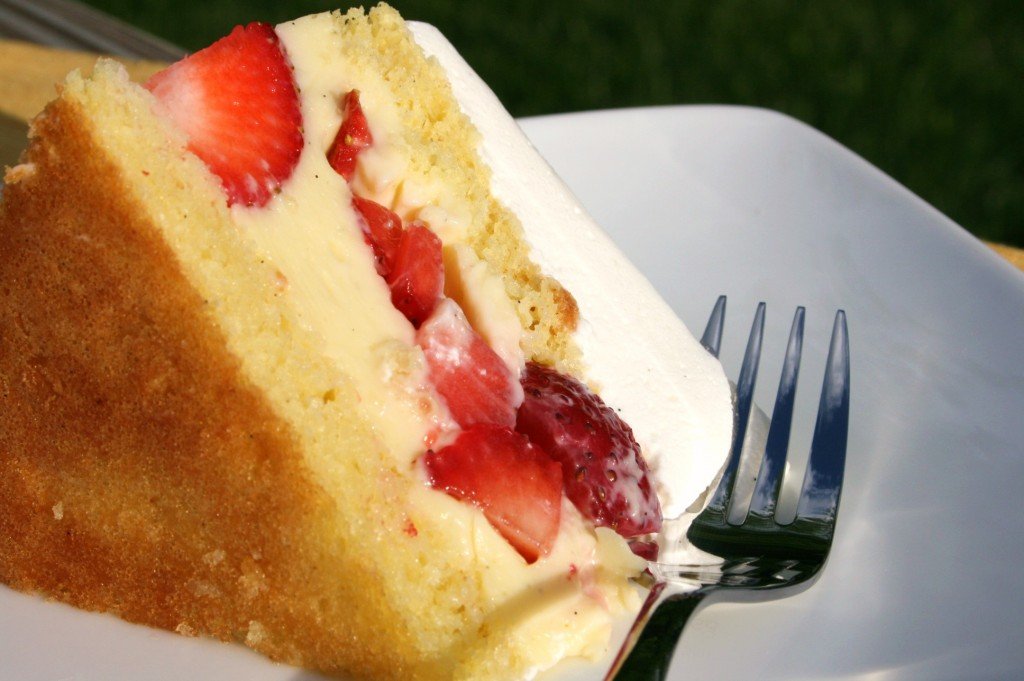
A Fraisier cake, is derived from the French word “fraise,” meaning strawberry. It is a classic French cake that is traditionally comprised of a sponge cake, Génoise, cut in half, imbibed liberally with a simple syrup flavored with alcohol, filled with a crème patisserie and topped with almond paste. My own special version was created in conjunction with my appearance on the American Baking Competition for my sweet mom, who instilled in me this passion for baking, veers off a bit from the traditional Fraisier by using vanilla bean for flavoring and whipped cream rather than almond paste.
Genoise
In 1892 Grover Cleveland was elected President of United States, Sir Arthur Conan Doyle publishes The Adventures of Sherlock Holmes, Thomas Edison receives a patent for a two-way telegraph and most pertinent to this particular post, it is also when the genoise cake was reportedly born. That is over a hundred years of bakers throwing their hands up in surrender and waving their white kitchen towel in a show of defeat and utter frustration. That, my friends, ends today. You will learn how to make the perfect genoise which will then be used in a stunning Fraiser cake.
There are certain adjectives that you find associated with a genoise cake: difficult, temperamental, persnickety… You get the idea. The reason is eggs. Plain and simple. Understanding the properties of eggs, how to use them and how they react in baking is the difference between baking a perfect genoise or having to scrape a flat, dense, unappetizing pancake from your pans. Here is the great news though, you have at your fingertips, with the mere click of your mouse, a comprehensive post on eggs which explains in detail everything you could ever want to know about them. So, armed with this knowledge and your newly forged confidence, I want you to grab your whisk attachment, hold your head up high, back straight, march into the kitchen and bake fearlessly!

Ingredients:
5 whole eggs (preferably, organic free-range at room temperature)
½ cup (100 g) granulated sugar
¼ teaspoons salt
3 tablespoons unsalted butter (room temperature)
1 vanilla bean pod
¾ cup (94 g) unbleached cake flour, double sifted
How to Use Them:
Preheat the oven to 350 degrees and prepare an 8 or 9 inch cake pan by spraying it with cooking spray and lining the bottom with parchment paper.
Prepare the cake flour by adding the salt and sifting it twice. Melt the butter in a small saucepan on medium heat until it reaches the beurre noisette stage.

This French term literally translates to hazelnut butter, because the butter is heated right until the moment you see specs of brown bits and it exudes the fragrant aroma of roasted hazelnuts. It is easy to burn the butter and so you must monitor it closely and remove the pan from the heat as soon as turns a lighter shade of brown. Split the vanilla bean, scrape out the seeds with the back of a butter knife and add to the butter, stirring to incorporate. Reserve the pod.
A genoise is a sponge cake that is leavened naturally with eggs using the foaming method which is the gentle warming of the eggs with sugar and beating them until they are foamy and thick. Warm egg mixture by whisking continuously over a bain-marie, a pot of simmering water, for approximately five minutes until warm to the touch, between 110-120 degrees. Do not let the pot boil and do not allow the bottom of the bowl to come in contact with the simmering water. You must whisk the egg mixture the entire time or you will end up with sweetened scrabbled eggs. In a stand mixer with the whisk attachment or a hand held mixer, whisk the warmed egg mixture initially on low speed for one minute and then progress to medium high for ten minutes until approximately tripled in volume. The mixture should be pale yellow, almost white in color and reach the ribbon stage, meaning that when you lift the whisk over the mixture the batter should fall slowly forming a ribbon that will hold it’s shape for a few minutes.

This process is call aeration, which means you are building air bubbles in the batter.
Sift the cake flour and salt directly over the egg mixture in thirds, gently folding after each addition. Using a large balloon whisk preferably, or spatula, gently go down in the batter, gently back up over towards the middle and down, rotating the bowl slightly. Fold just until all the cake flour is barely incorporated. Take ½ cup of this mixture and stir it into the warm melted butter, mix thoroughly and add it back, folding lightly to incorporate. Be careful not to over mix and deflate the air bubbles you have worked to build.

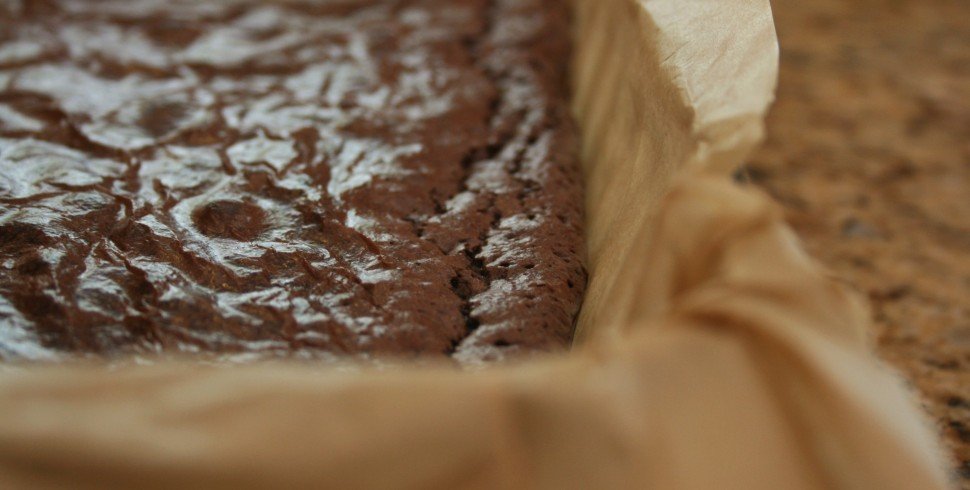
Bring the batter to as close to the pan as possible to retain the aeration that you have achieved. Very gently fill the prepared cake pan with the batter to ¼ inch from the top rim of the pan, Bake for 18-22 minutes until the top is a light brown and the cake tester comes out clean. Do not open the over door until you are certain the cake has baked sufficiently or it will collapse. Cool for five minutes in the pan on a cooling rake, then invert onto a plate and then immediately re-invert back onto cooling rack and cool completely.
[glossary_exclude]Crème Pâtissière[/glossary_exclude]
Crème Pâtissière, pastry cream, is a rich and velvety classic custard that is complemented by a myriad of flavorings and quite versatile in its application. In this recipe, it is vanilla beans that take a bow at center stage, and do beautifully in the filling encasing sun ripened, farm fresh strawberries plucked in peak season.

Ingredients:
5 large egg yolks (preferably, organic free-range at room temperature)
½ cup (100 g) granulated sugar
3 tablespoons unbleached all purpose flour
3 tablespoons corn starch
2 cups (16 oz) whole milk
1 vanilla bean pod
½ teaspoon salt
4 tablespoons unsalted butter, room temperature
How to Use Them:
Cut the vanilla bean pod in the middle to score the center without cutting all the way through and scraper out the vanilla beans.
Heat the milk, vanilla beans and vanilla bean pod on medium low heat until it just reaches boiling point.
While the milk is heating, vigorously whisk the egg yolks and sugar until blond in color, approximately three minutes.
Double sift the flour, cornstarch and salt and add it to egg mixture, whisking thoroughly until completely incorporate for another two minutes.
Once the milk reaches the boiling point, pour a slow, steady stream into the egg mixture while whisking constantly. When the milk is fully incorporated into the egg mixture, pour it back into the pot and heat for another 2 minutes, whisking constantly until you have a thick custard consistency. Add one tablespoon of butter at a time and whisk in until completely melted. Remove the pastry cream from the heat and empty it into the bowl of a stand mixer fitted with a paddle attachment or use a hand held mixer. Mix on medium speed until the mixture is cooled completely, approximately ten minutes.
If not using immediately, cover with plastic wrap directly on top the custard and refrigerate.
[glossary_exclude]Simple Syrup[/glossary_exclude]
Simple syrup is comprised of boiling sugar and water until sugar is completely dissolved and incorporated into the water to form a homogeneous liquid, which is then cooled. Simple syrup is an excellent vehicle for flavorings as it is a neutral base.

Ingredients:
½ cup (100 g) sugar
¼ cup (2 oz) water
1 vanilla bean pod
How to Use Them:
Bring the sugar, water and the scraped vanilla bean pod which was used for the Genoise to a rolling boil, swirling the pot intermittently, for approximately 5 minutes. Cool to room temperature.
Vanilla Bean Whipped Cream

Ingredients:
1 cup (8 oz) heavy whipping cream
2 tablespoons powered sugar
1 teaspoon vanilla bean paste or vanilla extract (Nielsen-Massey preferred)
How to Use Them:
Place the heavy cream, mixing bowl and whisk attachment in the freezer for ten minutes. Pour the cream into the mixing bowl and whisk on low for one minute and then gradually begin to increase speed to medium high. When soft whipped cream begins to take shape, sift in powdered sugar and add vanilla. Whisk on medium high until just stiffened.
Assembling the Fraisier Cake
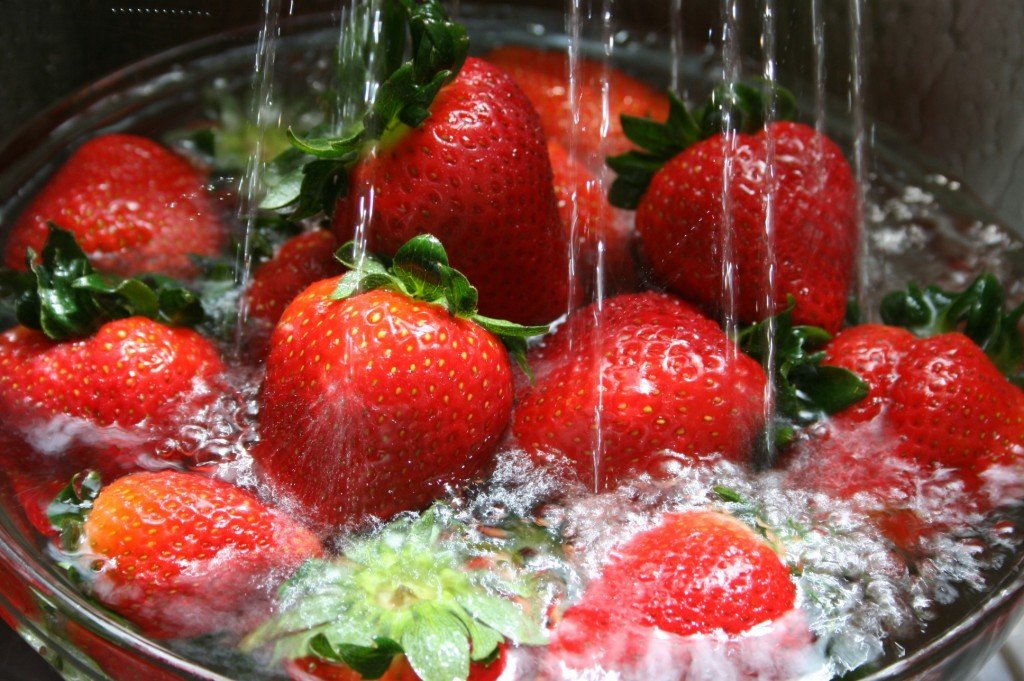
Wash and remove the stem of two pounds of fresh strawberries.
Slice the genoise cake in half. Place the bottom half on a serving platter you plan to serve the cake on, making certain it will fit in your refrigerator to chill. Wrap a piece of acetate or parchment paper around the diameter of the cake that is approximately three inches in height and secure with tape. While acetate is difficult to find in traditional grocery stores and is more of a pastry supply shop find, it works best. However, parchment paper is readily available and a sufficient substitute. I have provided photographs below using both. Placing a pastry ring or spring form pan around the cake will lend added support if those are on hand.
Using a pastry brush, brush vanilla syrup on the cake, making certain to soak the cake sufficiently.
It truly makes all the difference in the world to use fresh organic strawberries. Using fruit in the peak of its season is what allows bakes such as this to have deliciously pure flavors. You can taste the sunshine when biting into a ripe, juicy, sugary strawberry, Slice the strawberries in half length wise and place around the outer edge of the cake, closely squeezed together with the cut side facing out. 
Place the Crème Pâtissière in a piping bag with a plain tip and pipe a layer of pastry cream on the bottom of the cake and in between the strawberries. 
Quarter the remaining strawberries and fill the entire middle of the cake with them until you reach the tops of the strawberries lining the cake. 
Pipe and spread another layer of the pastry cream on top of the strawberries. Place the second half of the Genoise cake on top of the pastry cream layer and soak with the vanilla syrup.
Top with a thick layer of whipped cream which can either be piped decoratively or smoothed with a small offset spatula. Refrigerate for at least 4 hours to set. Decorate as desired with piped chocolate decorations or fresh strawberries.






Effie, this a clear and straightforward approach, with user friendly lingo. Thank you for all the time you have invested. We are lucky bakers.
Valarie, gratitude for the kindness. I truly love and I am so passionate about baking. I believe in the techniques and foundations of the craft which is why I try to highlight those in the recipes. I hope they inspire others to find the joy in baking.